

Disclaimer: The information provided here is educational in nature and is not intended to provide medical advice, diagnose or treat a condition, or fully address any specific symptom, health concern, or medical emergency. If you think you or another person is having a medical emergency, call 911 or seek care at the nearest emergency room right away. Do not rely on this article to diagnose a health concern or postpone getting appropriate medical care.
A pool can turn an ordinary Texas afternoon into the highlight of a child’s summer. But pool emergencies are not always loud or easy to notice. Drowning can happen quickly and often without obvious splashing or shouting.
That is why pool safety tips for parents are less about one perfect precaution and more about building several protections around children. For Abilene families, preparing before anyone enters the water can help create a safer swimming environment.
Quick Summary
Give one attentive adult responsibility for watching swimmers.
Keep toddlers and weak swimmers within arm’s reach.
Combine supervision with barriers, swimming skills, and appropriate life jackets.
Never substitute floaties for active adult supervision.
Keep rescue equipment and a working phone nearby.
Call 911 for a child who is unresponsive or having difficulty breathing after submersion.
Why Parents Need Multiple Layers of Pool Protection
No single precaution makes a child “drown-proof.” The CDC recommends combining close supervision, swimming skills, properly fitted life jackets when appropriate, and barriers that prevent unsupervised pool access. Four-sided fencing that separates the pool from the home provides particularly important protection for young children.
For effective swimming pool safety for kids, these precautions should work together rather than replace one another.
15 Pool Safety Tips for Parents
1. Assign a Distraction-Free Water Watcher
Choose one responsible adult whose only task is watching children in or near the water. Phones, conversations, reading, alcohol, and household chores can divide attention. Even when a lifeguard is present, parents should continue close supervision.
2. Keep Young or Weak Swimmers Within Arm’s Reach
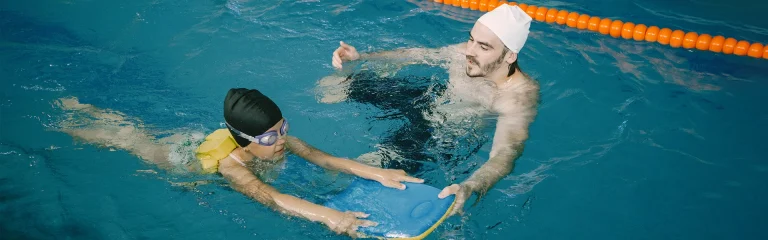
Infants, toddlers, and children who cannot swim confidently need “touch supervision.” An adult who can swim should remain close enough to reach the child immediately.
3. Never Make an Older Child the Lifeguard
A sibling or teenager should not replace responsible adult supervision. Young swimmers can get into trouble before another child recognizes what is happening or knows how to respond.
4. Teach Children to Ask Before Entering Water
One of the simplest pool rules for children is to ask an adult for permission before entering the water. Apply the rule at home, hotels, vacation rentals, and friends’ houses.
5. Start Age-Appropriate Swimming Lessons
Swimming lessons add protection but do not replace supervision. The American Academy of Pediatrics notes that lessons may begin for many children around age 1 when developmentally appropriate, while most children are ready by about age 4 or 5.
6. Choose Properly Fitted Life Jackets
Use a properly fitted, U.S. Coast Guard-approved life jacket when a child’s swimming ability or the water activity makes added protection appropriate. Check the size, fit, fasteners, and intended use before entering the water.
7. Do Not Depend on Floaties or Water Wings
Inflatable armbands and similar toys can slip off and create false confidence. The CDC specifically warns that these products do not prevent drowning.
8. Set Firm Deck and Diving Rules
No running, pushing, rough play, or unsafe diving. Children should enter feet-first unless the area is specifically intended for diving.
9. Check Depth Before Jumping or Diving
Never assume unfamiliar water is deep enough. Read posted markings and follow facility rules before anyone jumps or dives.
10. Remove Toys After Swimming
Balls, floats, and colorful toys can tempt a young child to return to the water alone. Store them outside the secured pool area after use.
11. Empty Portable Pools After Use
For backyard pool safety, drain small inflatable or portable pools when appropriate after use and prevent unsupervised access. Larger pools should have secure barriers and controlled entry.
12. Keep Children Away From Drains
Hair, clothing, limbs, or other objects can become trapped by suction. Teach children never to play around drains or suction outlets, and make sure drain covers comply with applicable federal safety requirements.
13. Keep Rescue Equipment and a Phone Nearby
Keep rescue equipment, such as a life ring or reaching pole, in a spot that is easy to access from the pool. Have a charged phone nearby so emergency help can be called quickly.
14. Learn CPR
Parents, caregivers, and regular pool supervisors should learn CPR and refresh their training periodically. For drowning emergencies involving children and infants, Red Cross guidance recommends CPR with compressions and ventilations for trained responders.
15. Review the Plan Before Parties and Trips
One of the most useful pool party safety tips is to assign a specific adult to watch swimmers rather than assuming someone else is paying attention. Before swimming begins, identify the water watcher, confirm pool rules, locate rescue equipment, and determine how emergency services would be contacted.
What Should You Do If a Child Is Missing Near Water?
Check the pool, spa, pond, or other nearby water immediately. Do not spend valuable time searching bedrooms, closets, or other locations first when water is accessible.
If the child is found unresponsive after being underwater, call 911 and follow the dispatcher’s instructions. If the child is not breathing normally, follow the 911 dispatcher’s instructions and begin CPR if you are trained to do so. The AAP identifies being found unresponsive after submersion as a reason for emergency medical services.
Warning Signs After a Child Is Pulled From a Pool
Seek prompt medical evaluation after a submersion if a child develops concerning symptoms such as:
trouble breathing or abnormal breathing;
persistent or worsening coughing;
blue, gray, or unusually pale skin or lips;
confusion, unusual behavior, or marked sleepiness;
loss of consciousness; or
difficulty waking or responding normally.
Outcomes after nonfatal drowning vary widely, from full recovery to serious complications, including brain injury. Do not rely on online information to decide whether concerning symptoms after a submersion are safe to ignore.
Printable Child Pool Safety Checklist
Before swimming, confirm:
A responsible water watcher is assigned.
Young or weak swimmers have close adult supervision.
Gates and barriers are secured.
Children know the water-entry rules.
Appropriate life jackets fit correctly.
Rescue equipment is accessible.
A working phone is nearby.
Adults know how to contact 911 and perform CPR.
Toys will be removed when swimming ends.
Drains and suction outlets are off-limits to children.
Final Thoughts
The best summer water safety tips become habits before the first splash: active supervision, secure barriers, swimming education, sensible rules, CPR preparation, and a clear emergency plan.
If a serious pool incident occurs in Abilene, call 911 when appropriate. Express Emergency Room Abilene is open 24/7 at 4157 Buffalo Gap Rd and is staffed by board-certified emergency physicians for adult and pediatric emergency evaluation. Emergency visits are triaged according to medical need, and insurance coverage and patient costs can vary.
For families in Abilene, a serious drowning or submersion emergency also requires immediate action: call 911 for life-threatening symptoms or seek the nearest appropriate 24/7 emergency room without delaying care.
Pool Safety FAQs
Maintain close, constant adult supervision. Barriers, lessons, and flotation equipment add protection but cannot replace an attentive caregiver.
Many children can begin lessons around age 1 when developmentally ready. Readiness varies, so parents should choose age-appropriate instruction rather than treating a particular birthday as a guarantee of preparedness.
Yes. Swimming ability reduces risk but does not eliminate it. Children who have completed lessons still need active supervision.
They are recreational products, not substitutes for approved life jackets or adult supervision. Floaties can slip off and create a false sense of security.
The watcher continuously observes swimmers without using a phone, reading, drinking alcohol, socializing extensively, or doing another task.
An adult should stay within arm’s reach and provide touch supervision. This is one of the most important swimming safety tips for toddlers.
Yes. Children who are weak or inexperienced swimmers should wear a properly fitted, U.S. Coast Guard-approved life jacket when appropriate, while still receiving close adult supervision.
Keep appropriate rescue equipment and a working phone accessible. Secure barriers, self-closing and self-latching gates, and compliant drain covers add further protection.
Call 911 for unresponsiveness, significant breathing difficulty, blue or gray coloration, or another apparent life-threatening emergency. After a submersion incident, concerning breathing, consciousness, or behavioral changes warrant prompt professional assessment.
Medical & Safety References
- Centers for Disease Control and Prevention (CDC). Drowning Prevention and Water Safety. Guidance on adult supervision, barriers, swimming skills, life jackets, and drowning prevention.
- American Academy of Pediatrics (AAP) / HealthyChildren.org. Updated Drowning Prevention Recommendations, 2026. Guidance on close supervision, layered prevention, and age-appropriate swim lessons.
- American Red Cross. Drowning Process Resuscitation Guidelines. Guidance on CPR and rescue breathing in drowning-related emergencies.
- U.S. Consumer Product Safety Commission (CPSC). Pool and Spa Drain Cover Safety. Guidance on anti-entrapment drain covers and keeping children away from drains.
- U.S. Coast Guard. Life Jacket Safety Guidance. Information on selecting properly fitted, approved personal flotation devices for children.